August 3, 2026
5 mins


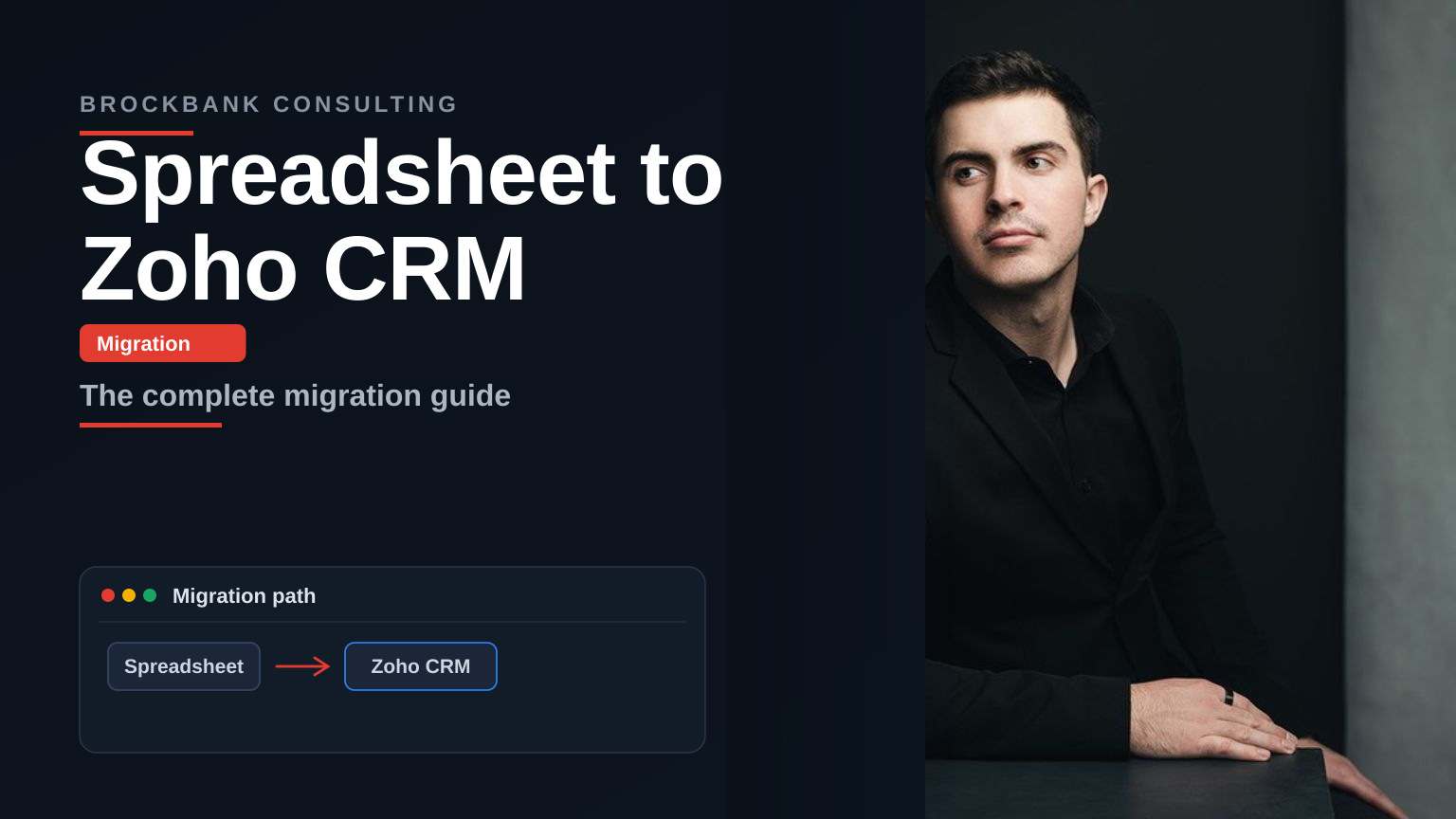


How do I migrate from spreadsheets to Zoho CRM?
To migrate from spreadsheets to Zoho CRM, start by cleaning your data: remove duplicates, standardize formatting, and map your columns to Zoho fields using the Import Wizard. This process turns static rows into connected records. Accounts, Contacts, Deals. So your team gets a single source of truth instead of scattered files.
Spreadsheets feel safe because they're familiar. But once your team grows past a few people, they become a bottleneck. You lose version control, miss follow-ups, and can't run reliable reports. Moving to Zoho CRM isn't just about moving data. It's about rethinking how you capture leads, manage communication, and track performance. A successful migration replaces manual entry with a connected workflow that gives you a clear audit trail for every deal.
This guide covers the technical and strategic steps to move your data safely. We'll look at how to prepare your files, the tools Zoho provides for importing, and the common pitfalls that stall implementation. Whether you're in Excel or Google Sheets, the goal is a clean, organized system your team will actually use.
Migrating means taking decentralized business data and organizing it into a structured, relational database. In a spreadsheet, a row might contain a name, phone number, and company. But that information is static and disconnected. Zoho CRM turns those rows into records that trigger automated workflows, schedule follow-ups, and track every interaction a salesperson has with a lead.
This isn't a simple copy-and-paste. You need to define how your data relates to itself. For example, a client might appear five times in five rows in a spreadsheet. In Zoho CRM, that client should be a single Account with multiple Contacts and related Deals. Understanding this relational structure is the first step. It ensures you can run meaningful reports on your sales pipeline without duplicate entries.
The migration also serves as a foundational audit of your current processes. As you prepare files for import, you'll likely spot gaps. Missing email addresses, inconsistent deal stage names. Fixing these before the move is far more efficient than cleaning up a messy CRM later. This preparation phase is where many businesses benefit from professional Zoho Processes Services to build a system that scales from day one.
The biggest win is eliminating manual data silos. When information lives in individual spreadsheets, sharing across a team leads to version conflicts and accidental deletions. Zoho CRM gives you a single source of truth. Every team member sees the same customer info in real time. If a salesperson leaves, their client history stays intact. Your business doesn't lose knowledge.
Reporting clarity improves dramatically. Spreadsheets require manual sorting and formula updates, which are error-prone. Zoho CRM offers built-in analytics that automatically track conversion rates, deal velocity, and team performance. You can see exactly where a lead is in your pipeline and which marketing sources deliver the best prospects. That visibility lets you make faster, smarter decisions.
Automation saves hours of admin work each week. You can use Zoho CRM Cadences to automate follow ups, set rules to assign leads by geography or industry, send welcome emails, and create tasks for follow-up calls. These automations ensure no lead falls through the cracks because someone forgot to check a spreadsheet. Your team focuses on building relationships and closing deals, not managing data entry.
A clean handoff between marketing and sales becomes much easier. You can track a lead from the first website click all the way to a signed contract. That full-cycle view of the customer journey is impossible to maintain in a spreadsheet without a massive time investment. For businesses looking to optimize these workflows, Zoho Processes Services provide the expertise to build these automations correctly the first time, ensuring high user adoption and a strong return on your software investment.
Your migration path depends on the complexity of your spreadsheets and the business outcomes you need. For a small team with a single, clean Excel file, the native Zoho CRM Import Wizard is often the most direct route. It lets you map columns to fields and handle basic validation. But if your data is spread across multiple workbooks with complex relationships. Like linking project notes to contacts and their parent organizations. A manual import can quickly become overwhelming. You'll need to decide between a DIY approach and a professional Zoho Implementation Partner plan.
An honest assessment of your data hygiene is critical. If your spreadsheets have inconsistent naming, duplicates, or missing details, importing them only moves the mess into a more expensive system. Before you begin, verify your data is ready for a relational database. Zoho CRM requires unique identifiers. Like email addresses or account IDs. To link records. If your files lack this structure, you may need a deep cleanup or third-party tools to ensure a clean handoff.
For organizations with sophisticated sales cycles or high-volume data needs, professional assistance often makes sense. Zoho Processes Services provide the most value by auditing your existing workflows before a single record is moved. A consultant can help you determine which custom fields to create in Zoho CRM to capture the nuances your spreadsheet can't handle. Choosing a professional path ensures roles, permissions, and sharing rules are configured correctly from the start. A major factor in long-term user adoption and reporting clarity.
Technical requirements also matter. If you need to migrate history from multiple sources or require ongoing synchronization between Zoho and another tool, a basic CSV import won't cut it. You may need API-based migrations or specialized migration scripts that handle high volumes without errors. Professional Zoho Processes Services are designed for these technical hurdles, ensuring transaction histories, email logs, and attachments move over without loss of integrity. That precision separates a basic data move from a strategic system upgrade.
Finally, consider the human element. The best technical setup fails if your team finds the system too hard to navigate. Include a plan for training and ongoing support. A phased approach. Migrating one department at a time. Helps you identify friction points and adjust your Zoho configuration before the full rollout. By focusing on an implementation plan that prioritizes user experience, you ensure the CRM becomes a tool for growth, not a source of frustration.
| Migration Method | Best For | Key Consideration |
|---|---|---|
| Native Import Wizard | Simple, single-file migrations | Requires perfect CSV formatting |
| Zoho Migration Tool | Moving from other CRM platforms | Automates field mapping for standard apps |
| Partner-Led Implementation | Complex data and custom workflows | Ensures data integrity and team adoption |
Ultimately, the goal is a system that reflects your operating reality. Whether you handle the import yourself or engage an expert team, focus on data quality and report clarity. A well-executed migration turns a static spreadsheet into a dynamic engine for sales, giving you the visibility to scale with confidence. Taking the time to choose the right approach now prevents a costly rebuild six months down the road.
The first step to migrate from spreadsheets to Zoho CRM is to clean your existing data by removing duplicates and standardizing formatting. This preparation phase ensures that your import goes smoothly and prevents messy data from polluting your new CRM. Addressing these issues before the move is far more efficient than cleaning up after.
To map spreadsheet columns to Zoho CRM fields, you use the Import Wizard to match each column like Company Name to the corresponding field such as Account Name. This mapping step is critical because it defines how your static spreadsheet data becomes structured records in the CRM. Proper mapping ensures that contacts link to their accounts and deals relate correctly.
The benefits of migrating from spreadsheets to Zoho CRM include eliminating manual data silos and creating a single source of truth for your team. You gain built-in analytics that automatically track conversion rates and deal velocity, replacing manual spreadsheet sorting. Automation features like Zoho CRM Cadences can handle follow ups and lead assignment, saving hours of administrative work each week.
To handle duplicate records when migrating from spreadsheets to Zoho CRM, you must clean your data before import by removing duplicate entries and standardizing names. In a spreadsheet a client might appear multiple times, but in Zoho CRM that client should be a single Account with multiple Contacts and Deals. Using the Import Wizard lookup fields helps link records correctly and avoid duplicates.
Yes, you can migrate data from multiple spreadsheets into Zoho CRM, but the process requires careful planning. If your data is spread across several workbooks with complex relationships, the native Import Wizard may still work, but you might need professional Zoho Processes Services to ensure proper mapping and relational structure. The goal is to end up with a clean organized system that reflects your actual business processes.
Common mistakes to avoid when migrating from spreadsheets to Zoho CRM include skipping data cleaning and failing to map relationships between records. Another pitfall is not standardizing deal stage names or missing required fields like email addresses. Addressing these gaps before the import is far more efficient than trying to fix a messy CRM after the fact.
Zoho CRM improves reporting compared to spreadsheets by offering built-in analytics that automatically track conversion rates, deal velocity, and team performance without manual sorting or formula updates. You can see exactly where a lead is in your pipeline and identify which marketing sources provide the highest quality prospects. This level of visibility allows for faster more informed decision-making.


Book your free consultation to learn how Zoho should work for your business. We will show you the best practice ways to set it up and use it for your industry so you get the most out of Zoho.


Dive deeper into our expert articles.