
June 20, 2026
5 mins

min
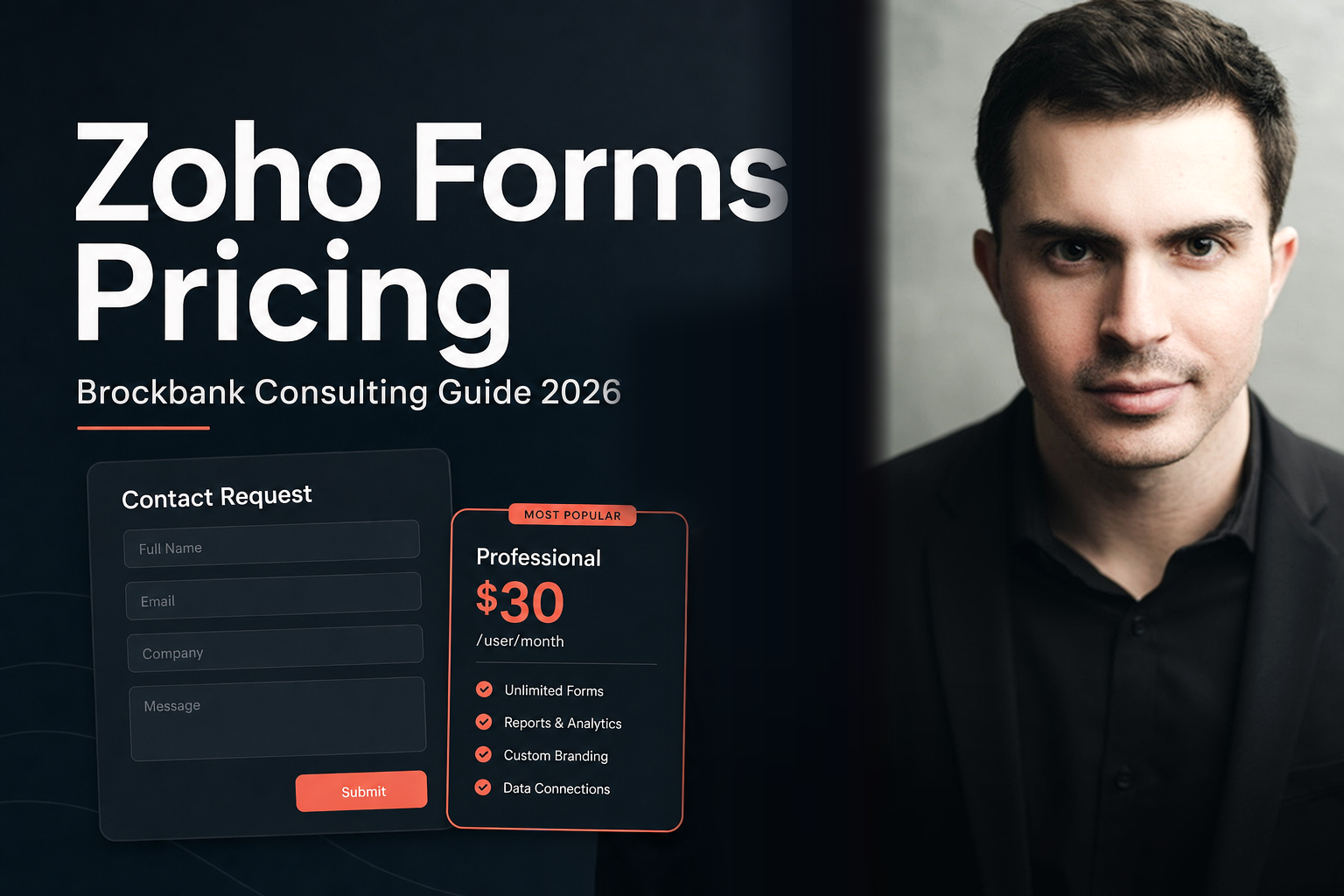


Zoho Forms pricing is only useful when you match the plan to the workflow. The free plan is fine for light testing and simple forms. Basic can cover straightforward lead capture. Standard usually becomes the practical starting point when payments, task ownership, and stronger process controls matter. Professional and Premium are better fits when forms become part of a high-volume, approval-heavy, or compliance-sensitive operation.
That is the way I would evaluate it with a client. Do not choose a plan because the monthly price looks small. Choose it because the submission limits, storage, users, approvals, payments, and integrations match how the business will actually run the process.
Zoho’s U.S. plan structure is typically organized around Free, Basic, Standard, Professional, and Premium. The numbers below separate annual billing from month-to-month billing because that is where pricing confusion usually starts.
| Plan | Annual Billing | Monthly Billing | Monthly Submissions | Storage | Best Fit |
|---|---|---|---|---|---|
| Free | $0 | $0 | 500 | 200 MB | Testing, simple internal forms, very light use |
| Basic | $10/month | $12/month | 10,000 | 500 MB | Simple lead capture and basic operational forms |
| Standard | $25/month | $30/month | 25,000 | 2 GB | Payments, ownership, and stronger workflow control |
| Professional | $50/month | $60/month | 75,000 | 5 GB | Higher-volume teams, approvals, analytics, custom themes |
| Premium | $90/month | $110/month | 150,000 | 10 GB | Enterprise teams, custom domains, stronger governance |
Pricing can change, so verify the live Zoho pricing page before you purchase. The better exercise is to map the form to the process first. If a form submission creates a CRM lead, assigns a follow-up owner, collects payment, stores files, and feeds a report, the lowest license cost is rarely the most important variable.
The free plan is useful when you want to test the builder, publish a small form, or collect a limited number of responses. It is not the plan I would build a serious client intake, quote request, hiring workflow, payment flow, or support process around. Once the form starts affecting customers or internal handoffs, the free plan tends to create avoidable friction.
Basic is usually the first plan worth considering for a small business that needs unlimited forms and more submission capacity. It can work well for contact forms, internal request forms, simple website lead capture, and early-stage operational workflows. The limitation is not that Basic is weak. The limitation is that many real business forms need more than capture. They need ownership, approvals, payment handling, and cleaner downstream routing.
Standard is often where Zoho Forms starts to feel like part of an operating system instead of just a form builder. If the form needs to collect payments, assign tasks, support private sharing, or move responses through a more controlled process, this is usually the tier to evaluate first.
For many teams, Standard is also the point where implementation quality starts to matter more. Naming conventions, required fields, validation, notification rules, and CRM mapping all affect whether the form saves time or creates another cleanup queue.
Professional makes sense when submission volume is materially higher or the workflow needs more advanced handling. This can include approval steps, custom themes, analytics, and more complex form behavior. I would look at this tier for teams that already know forms are a core part of their sales, operations, onboarding, or support process.
Premium is the better fit when the business needs stronger governance, high submission limits, custom domains, and more room for users and storage. It is also where you should pay closer attention to access control, naming standards, ownership, file retention, and reporting structure. The stakes are higher because the forms are usually supporting a process that multiple teams rely on.
The simplest upgrade trigger is this: if someone on your team has to manually move form data into another system every week, the form is probably underbuilt.
License pricing is easy to compare. Implementation cost is where teams usually underestimate the project. A cheap form that creates bad records, duplicate leads, incomplete files, or unclear handoffs can cost more than the subscription it was supposed to save.
Every field should have a reason to exist. Required fields should be required because the process cannot move forward without them, not because someone thought the data might be useful someday. Good field design keeps submissions clean and prevents CRM records from becoming inconsistent.
One of the most common mistakes is sending every notification to a shared inbox and hoping someone takes care of it. A better setup defines ownership clearly. Sales lead forms, support forms, onboarding forms, payment forms, and internal request forms may all need different routing logic.
Zoho Forms can be much more valuable when it connects with Zoho CRM, Zoho Desk, Zoho Projects, Zoho Books, Zoho Creator, Zoho Flow, or Zoho Analytics. But integration should not mean sending data everywhere. It should mean sending the right data to the system that owns the next step.
If the people receiving submissions do not understand the process, the form will not fix the workflow. Teams need to know what the form does, where responses land, what action they own, and how to spot incomplete or incorrect submissions.
At Brockbank Consulting, we look at Zoho Forms as one piece of a connected Zoho system. The question is not, “Can we build a form?” The better question is, “What should happen after someone submits it?”
That means we start with the process. Who submits the form? What data do they provide? Which Zoho app should receive it? Who owns the next step? What should be automated? What should stay human? What should leadership be able to report on later?
That approach is especially important for businesses using Zoho CRM, Zoho Projects, Zoho Books, or Zoho One. A form can be the front door to the whole workflow. If the front door is messy, the rest of the system becomes harder to trust.
Zoho Forms is not always the right tool. If a team only needs a polished marketing survey, a standalone tool like Typeform may be easier to present. If a team needs fast template-heavy form creation, Jotform can be attractive. If the need is a quick internal poll, Google Forms may be enough.
Where Zoho Forms becomes more compelling is inside a Zoho-first operation. If your team already runs sales in Zoho CRM, tracks work in Zoho Projects, manages billing in Zoho Books, or builds custom processes in Zoho Creator, the form should not be evaluated as a standalone landing page widget. It should be evaluated as part of the operating system.
| Tool | Best For | Tradeoff |
|---|---|---|
| Zoho Forms | Connected Zoho workflows, CRM routing, payments, approvals, and operational forms | Needs thoughtful setup to get the most value |
| Typeform | Consumer-facing surveys and conversational form experiences | Less native depth for Zoho-first operations |
| Jotform | Template-heavy form creation and quick PDF-style workflows | May require more connectors for end-to-end Zoho process design |
| Google Forms | Simple internal polling and lightweight data capture | Limited business workflow, branding, payment, and governance depth |
Before you choose a Zoho Forms plan, write down the workflow in plain English. A customer submits the form. Then what happens? Who gets notified? Does the submission create or update a CRM record? Does it collect payment? Does it need approval? Does it start a project? Does leadership need reporting?
Once that is clear, the plan decision gets much easier. You are no longer comparing software boxes. You are choosing the lowest plan that can support the workflow without creating hidden manual work.
If you want help designing that workflow, Brockbank Consulting can map the process, select the right Zoho Forms tier, build the form, connect it to the right Zoho apps, train the team, and support the system after launch.
Brockbank Consulting helps teams design, implement, train, and support Zoho systems that match real operating workflows.
Yes. Zoho Forms has a free plan that can work for basic forms, light testing, and small internal use cases. In practice, most businesses outgrow it when they need more forms, higher submission volume, payments, approvals, or cleaner integrations with the rest of their Zoho system.
For U.S. pricing, Zoho Forms paid plans are commonly shown as Basic, Standard, Professional, and Premium. Annual pricing is lower than month-to-month billing. The important implementation question is not just the monthly fee, but whether the plan supports the submissions, users, storage, approvals, payments, and integrations your workflow needs.
Basic is usually enough for simple lead capture and internal request forms. Standard becomes more useful when payment collection, task ownership, and stronger workflow controls matter. Professional and Premium are better fits when submissions are high-volume, approvals are more complex, or the form process needs stronger governance.
Upgrade when the form is part of a real business process instead of a simple survey. Common triggers include more than a few active forms, manual copying into CRM records, payment collection, file uploads, approval steps, or submission volume that creates operational risk.
Yes. The reason Zoho Forms is often a strong choice for Zoho-first businesses is that form submissions can support CRM, Projects, Desk, Books, Creator, Flow, and reporting workflows. The setup still needs to be designed carefully so the data lands in the right place with the right owner.
Yes. Brockbank Consulting helps businesses plan, build, integrate, train, and support Zoho workflows, including forms that feed CRM, project, finance, support, and reporting processes. The goal is to make the form useful inside the operation, not just published on a page.
Drew Brockbank is the founder and lead Zoho consultant at Brockbank Consulting, a top 1% global Zoho consulting partner with a 100% U.S.-based team. Drew and his team help organizations design, implement, train, and support Zoho systems that are clear enough for teams to use and structured enough to scale.
Drew has led 185+ Zoho implementations across CRM, Projects, Books, Creator, Analytics, Zoho One, reporting, integrations, and workflow automation. His writing focuses on what actually matters during implementation: clean ownership, practical process design, reliable reporting, user adoption, and fewer disconnected tools.
Through Brockbank Consulting's full-cycle Zoho services, Drew helps businesses move from scattered processes to connected systems that support sales, operations, finance, and leadership visibility. His guidance is direct, practical, and grounded in hands-on Zoho project work.
Learn more about Brockbank Consulting's Zoho consulting services.

Book your free consultation to learn how Zoho should work for your business. We will show you the best practice ways to set it up and use it for your industry so you get the most out of Zoho.


Dive deeper into our expert articles.

Brockbank Consulting™ proudly holds the official title of Zoho partner, authorized directly by Zoho Corp, a testament to our commitment to providing high-quality implementation and improvement services tailored to the diverse needs of users.
